Beach Safety Tips Every Visitor Should Know
By admin • • Tips •
Reading Time: 10 mins
Stay safe while enjoying the sun and surf. Discover essential beach safety tips every visitor should know — from rip currents to sun protection.

A day at the beach is one of life’s simplest joys. The sound of waves, the feel of warm sand, and the salty breeze make it a favorite getaway for families and travelers. But even the most safe beaches USA can have hidden risks. From rip currents that can pull swimmers away from shore to dehydration caused by hours under the sun, small mistakes can quickly turn a relaxing day into a stressful one. Being aware of how to stay safe at the beach helps prevent accidents and keeps your trip fun and worry-free. Whether you are walking the shores of California or enjoying the calm waters of Florida, safety always comes first.
In this blog, you will learn about the ten most valuable and essential beach safety tips every visitor should know to keep themselves and their loved ones safe. You will discover how to check weather and water conditions before you go, how to identify and escape rip currents, and ways to protect yourself from sunburn and heatstroke. You will also learn to respect marine life encounters, swim near lifeguards and follow flag warnings, and keep an eye on tides and waves. Plus, we will share why it is important to stay hydrated and take breaks, be careful with beach gear and kids, avoid alcohol while swimming, and know basic first aid and emergency contacts.
🧭 1. Check Weather And Water Conditions Before You Go

Before you start your weekend getaway, always check local weather reports and surf forecasts to make sure it is safe to visit the beach. Conditions at the coast can change quickly, bringing strong winds, rough waves, or dangerous rip currents. Checking the forecast also helps you prepare for temperature changes, pack the right gear, and plan your activities safely. It is one of the most important beach safety tips to follow before heading out.
Why It Matters:
Changing tides: Rising tides can trap people on rocks or block safe exits from the shore.
Strong winds: Gusty conditions can cause large waves and make swimming difficult.
Water quality: Rain and storm runoff can pollute the ocean, making it unsafe for swimming.
Pro Tip:
Use NOAA Beach Forecasts or local lifeguard beach safety updates for real-time information on tides, wind, and marine warnings before your trip.
🌊 2. Learn How To Identify And Escape Rip Currents

Learning how to identify and escape rip currents is one of the most important beach safety tips for every visitor. These fast-moving water channels can appear calm but are extremely powerful, often catching swimmers off guard during a family beach day. Understanding how to spot them and what to do if caught can save your life. The key is to stay calm, swim parallel, and then swim back safely to shore.
How to Spot a Rip Current:
Wave gap: Look for a break in the wave pattern where water appears flat or calm.
Churning water: Watch for darker or foamy water that moves quickly away from the shore.
Floating debris: Notice foam or seaweed being pulled steadily seaward.
If You Are Caught in One:
Stay calm: Conserve your energy and do not fight against the current.
Swim parallel: Move sideways along the shore until you are out of the current.
Swim back: Once free, angle back toward the beach with the help of incoming waves.
Pro Tip:
Always choose a beach with a lifeguard station and follow lifeguard beach safety advice. Lifeguards can point out rip currents and help you find the safest swimming zones.
☀️ 3. Protect Yourself From Sunburn And Heatstroke

Protecting yourself from the sun is one of the most important parts of sun safety, especially when spending long hours by the shore. Even when clouds cover the sky, UV rays reflect off sand and water, increasing the risk of sunburn and heatstroke. Using broad-spectrum SPF 30+ sunscreen, wearing UV-protective clothing, and staying hydrated will help you enjoy the beach safely while caring for your skin during your next vacation safety adventure.
Best Practices:
Apply sunscreen: Use broad-spectrum SPF 30+ sunscreen at least 15 to 30 minutes before going outside.
Reapply often: Apply again every 2 hours, especially after swimming or sweating.
Cover up: Wear UV-protective clothing, a wide-brimmed hat, and sunglasses for added shade.
Rest smart: Spend time under umbrellas or shade, especially during midday heat.
Quick Check:
If you start feeling dizzy, tired, or your skin turns red and warm, move into shade immediately, drink water, and cool off using a wet towel or by dipping into the sea near the glowing bioluminescence.
🪸 4. Respect Marine Life And The Environment

Beaches are natural habitats filled with sea creatures, plants, and coral reefs that make up a delicate ecosystem. Being mindful of your surroundings keeps both people and marine life safe. Respecting nature is an important part of beach safety for families, as it teaches children to care for the environment while enjoying their time by the shore. Together, we can keep coastlines clean and beautiful for everyone.
Safety Guidelines:
Keep distance: Watch sea animals from afar and never chase or touch them.
Watch your step: Hidden creatures like stingrays or sea urchins may rest under the sand.
Handle stings: If a jellyfish stings you, rinse with vinegar and remove tentacles carefully using a stick or glove for proper Jellyfish sting first aid.
Environmental Tip:
Pick up litter, avoid stepping on coral or dunes, and choose reef-safe sunscreen to protect the ocean while enjoying your vacation safely.
🚩 5. Swim Near Lifeguards And Follow Flag Warnings
Swimming near lifeguards is one of the smartest swimming safety choices you can make. Lifeguards constantly watch for hazards like rip currents and sudden waves, ready to respond within seconds. They also use beach flags to signal real-time water conditions, helping you make safe decisions before entering the water. Always stay alert, follow their directions, and check the posted safety board for local updates before starting your beach day.
Beach Flag Colors to Know:
Red Flag: High hazard: Strong surf and dangerous currents, stay close to shore.
Yellow Flag: Medium hazard: Moderate waves, enter the water with caution.
Green Flag: Low hazard: Calm conditions, but always remain alert.
Purple Flag: Marine life warning: Jellyfish or stingrays may be present.
Pro Tip:
Read the flag meanings every time you visit a new beach. Conditions change daily, and pairing flag awareness with sun protection at the beach keeps your day fun and safe.
👣 6. Keep An Eye On Tides And Waves
Tides and waves can change fast, turning calm waters into risky spots within minutes. A peaceful sand area during low tide can disappear quickly as the water rises. Staying alert helps prevent getting trapped near rocks or strong currents. Always watch the shoreline, understand the tide’s direction, and plan your swim or walk when the water is moving out. Awareness of natural changes is a key part of safe beach visits.
Safety Steps:
Check Tides: Look up the tide schedule before heading to the beach.
Watch Movement: Notice if the waterline is rising or falling while you relax.
Stay Alert: Never turn your back on the ocean; waves can appear suddenly.
App Suggestion:
Use Tide Charts Near Me or My Tide Times for live updates on tides and wave height to stay safe and informed during your beach trip.
🧴 7. Stay Hydrated And Take Breaks

Spending long hours at the beach can quickly lead to heat exhaustion or dehydration, especially when the sun, salt, and wind are strong. Even while swimming, your body loses fluids through sweat and heat exposure. Staying hydrated helps you stay alert, comfortable, and safe. Remember to take shade breaks, rest often, and keep sipping water throughout the day to maintain your body’s balance and enjoy your beach time safely.
Tips for Staying Hydrated:
Start Early: Drink plenty of water before arriving at the beach.
Choose Smart Drinks: Avoid alcohol and caffeine, as they increase dehydration.
Cool Snacks: Eat fruits like watermelon, cucumber, and oranges to stay refreshed.
Bonus Tip:
Take short breaks under an umbrella or shaded area every hour to let your body cool down and recover before going back into the sun.
🏖️ 8. Be Careful With Beach Gear And Kids

Beach days are meant to be fun, but safety should always come first, especially when children and gear are involved. Unsecured umbrellas, deep sand holes, or unsupervised kids can turn a relaxing outing into an emergency. Always keep an eye on your children, set clear boundaries, and make sure all equipment is properly secured. A few small steps can make your family's beach day safer and much more enjoyable for everyone.
For Families:
Stay Close: Keep young children within reach, especially near the water.
Secure Gear: Anchor umbrellas and tents firmly to prevent them from flying away.
Set Landmarks: Choose a visible spot or flag so kids can easily find your area.
Lost Child Protocol:
If your child goes missing, notify a lifeguard tower immediately and share details of what they are wearing. Lifeguards can alert others quickly through radios or speakers.
🪁 9. Avoid Alcohol While Swimming
Drinking alcohol before or during swimming can quickly turn a fun beach day into a dangerous one. Alcohol affects your balance, slows your reaction time, and clouds your judgment, making it harder to respond to unexpected waves or currents. It also dehydrates your body, increasing the risk of heat exhaustion under the sun. Staying alert and sober in the water keeps swimming safety a top priority for everyone enjoying the day.
Dangers:
Slow Reaction: Alcohol weakens coordination and balance, making it hard to stay afloat.
Poor Decisions: Impaired judgment increases the risk of swimming too far or in unsafe areas.
Body Effects: Drinking lowers body temperature and can lead to fatigue or confusion in the water.
Pro Tip:
Keep all drinks alcohol-free while near the ocean. Celebrate with your group once you are done swimming, dry, and safely away from the shoreline.
⚡ 10. Know Basic First Aid And Emergency Contacts
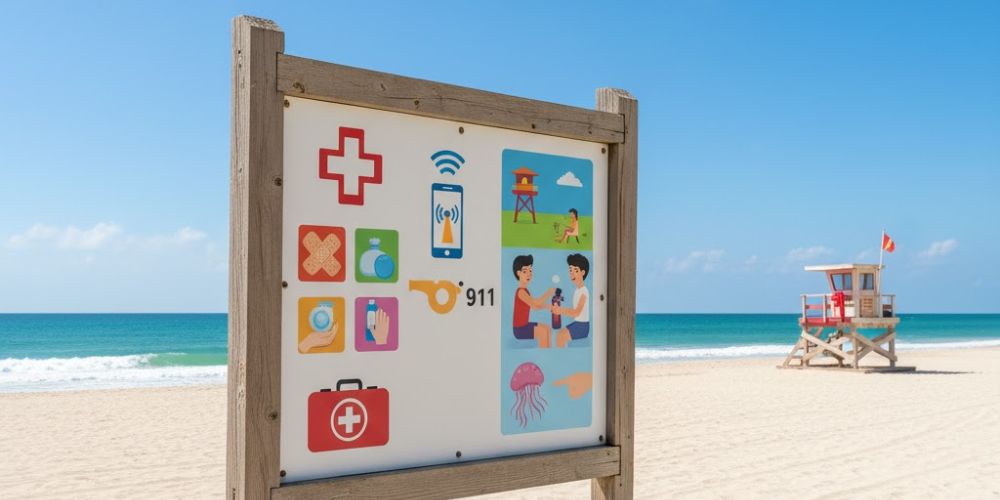
Accidents can happen anytime at the beach, from small scrapes to heat exhaustion or jellyfish stings. Knowing simple first aid helps you act quickly and calmly before help arrives. Keep your phone charged, know where the nearest lifeguard is, and remember that staying calm makes a big difference. A little preparation can turn a stressful moment into a manageable one and keep everyone safe until professionals take over.
Beach First Aid Essentials:
Bandages: Cover cuts or scrapes to prevent infection.
Vinegar: Use it to ease jellyfish stings and reduce pain.
Cold Pack: Apply to sprains or bruises to reduce swelling.
Emergency Tip:
Save local emergency and lifeguard numbers in your phone before you arrive. In a serious situation, call for help right away and describe your location clearly.
🌇 Final Thoughts
Enjoying a day by the sea is all about being aware, prepared, and respectful of your surroundings. Here you have learned about the ten most valuable beach safety tips every visitor should know to help you and your loved ones stay safe. You discovered how to check weather and water conditions before heading out, how to identify and escape rip currents, and ways to protect yourself from sunburn and heatstroke. You also learned how to respect marine life and the environment, swim near lifeguards and follow flag warnings, and keep an eye on tides and waves. Plus, you understood why it is important to stay hydrated and take breaks, be careful with beach gear and kids, avoid alcohol while swimming, and know basic first aid and emergency contacts.